
UoN Office of Career Services (OCS)

Pillars to Success – Charles Murito, CEO Google

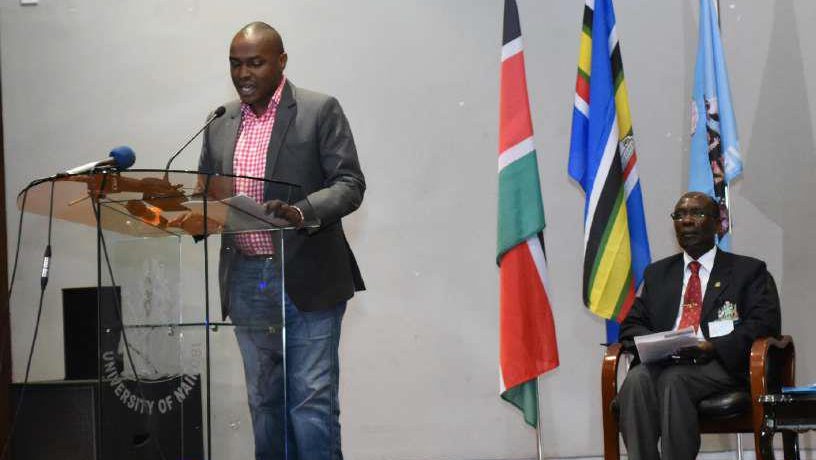
During the 2018 Inaugural Chancellors Career Fair held at the University of Nairobi, Mr. Murito, the CEO of Google focused his talk around three pillars: Perception, 3A’s and a Round Community; all which add value to an individual while navigating through life.

Today, the UoN Office of Career Services looks back at these great life lessons and shares them again for a student out there to benefit from.

Perception: A gram of perception is worth a kilo of performance. This means that one should think of how they would achieve success as well as how they would approach it. One should consider the ethics/ morality that surrounds them as well as their character. Graduates should thus change their perception on wanting to be successful by just making money to how they can actually earn the money. They should be patient as success takes time and there is no shortcut.

The second pillar (Three A’s) include; Ambition, Ability and Attitude. Graduate students should set their ambitions high so that the next generation will continue building on it. Students should also be overly ambitious to an extent that no matter what happens in their lifetime, it will be the anchor to ensure they steer to the right direction in terms of their goals and objectives set. A case scenario on achieving one’s ambition is on ‘Poverty Alleviation’. This entails taking initiative and perhaps starting a company, building it over time so as to create opportunities just like google (content creators, designers etc. have a platform of sharing their talent across the world).

Ability is all about preparing oneself to achieve ambitions set out. Graduates must therefore sharpen their skills and stay up-to-date with the current trends in their specific fields as change is bound to take place as it is considered to be revolutionary and not evolutionary. It is important for one to think of how they would approach the work they do and make changes that are revolutionary. The last ‘A’ is Attitude. Everyone likes to work with those who are nice; one should therefore be deliberate on how they treat others. Graduates should also be open when it comes to learning as it is with this that earning takes place. Mr. Murito stated that students ought to be open to challenging themselves so as to rise whenever they fall.

The last pillar, Community, is concentrated on the quote: A rising tide raises all boats. One has to be able to fit with others. Graduates need to stand out and be able to build a prosperous community as this in turn helps individual companies thrive.

With these nuggets of advice from Mr. Murito, the Office of Career Services hopes someone’s life will be impacted on positively.


Virtual Career Fair 2020

In the wake of the COVID-19 pandemic, the Office of Career Services is now offering online career services to students to ensure there is business continuity despite the pandemic disruptions.

To realise this, the Office of Career Services has lined up series of Career Webinar sessions from 22 May to 30th June, 2020. These Webinar sessions are planned with Industry Partners who will offer sessions preparing students for the job market such as CV writing skills, Interview etiquette, Branding for employment among others.

There will also be partners from job listing companies like My Jobs in Kenya and Fuzu among others offering information on available jobs in the market and how best students can position themselves to secure these jobs.

The Office of Career Services is also planning to host a virtual career fair in the early week of June 2020. The goal is to showcase job opportunities available in the job market, how students can position themselves in terms of proper CV writing, job search strategies and interview techniques among others.

The Virtual Career Fair will be achieved by HR Managers/Directors having webinanars with the University of Nairobi students.

OCS Promoting Venture Capital

The African Development Bank (AfDB) has partnered with the Ministry of Agriculture’s Agricultural Finance Corporation (AFC) to support students with great ideas that can revolutionize agricultural farming and support them with capital. The University of Nairobi is in discussion with AFC to support those students who have been trained in Israel to get capital to venture into agri-Business activities when they return back home from their 11 months’ diploma program in Israel.

The Arava International Centre for Agricultural Training (AICAT) offers this diploma program that promotes learning by doing where the students receive hands-on mechanised agricultural skills. In early 2016, President Uhuru Kenyatta and Israel Prime Minister Benjamin Netanyahu signed an agreement dubbed “The Jerusalem Declaration” or the “Declaration on Collaboration in Water and Irrigation” that would see fresh graduates from institutions of higher learning attend an 11-month practical training course in Israel.

Need for Office of Career Services in all Universities and Tertiary Institutions

According to the Inter-University Council of East Africa, Kenya has a total of 73 universities and constituent colleges and nearly 200 public tertiary institutions that graduate students every year. Unfortunately, most of these graduates are either under-employed or unemployed, while a few who are employed often do not have the technical competencies and skills required by industry.

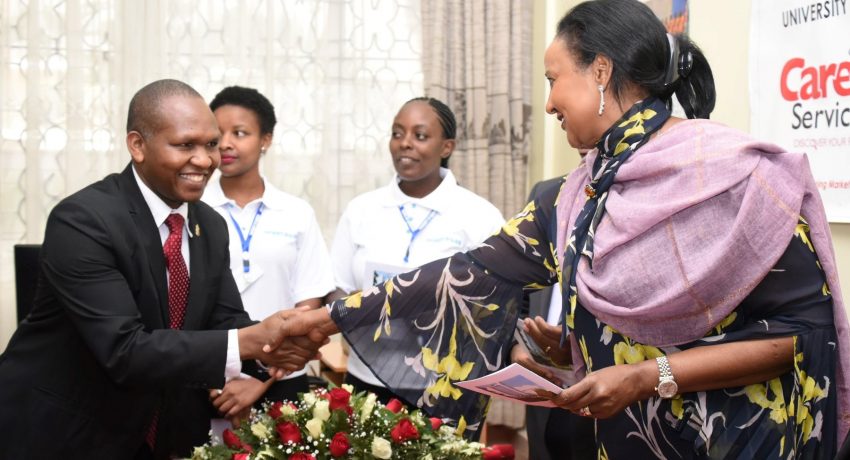
While there are many reasons for unemployment, including poor economic growth and expansion of industry, lack of technical competencies and skills has been noted by Inter-University Council of East Africa and employers as a major challenge.Consequently, Kenya, through higher learning institutions in collaboration with industry has to address these problems for effective implementation of Vision 2030, African Agenda 2063 and the Sustainable Development Goals (SDGs). The Kenya Government’s concern for youth unemployment and lack of effective linkage with industry triggered the Ministry of Education to roll out the establishment of the Office of Career Services (OCS) in all universities and tertiary institutions. The former Cabinet Secretary Ministry of Education, Amb (Dr.) Amina Mohamed launched the Office of Career Services policy on 21st June 2018 at the University of Nairobi.

Interview tips – Do’s and Don’ts

An interview is any job seekers door to a potential employer and only offers one chance to impress. Any job seeker’s goal should be to be as impressive as possible for the employer to offer them a job.

But keep in mind that it’s also an opportunity for the interviewee to interview the interviewers on the company and job so that one can assess if they can fit in the job.

Do’s

  1. Do research on the company on their website, Facebook page, Twitter feed, and other social media before the interview so that you have an idea on what products/services the company offers. If you happen to have the interviewer’s names, also research about their professional backgrounds.
  2. Do know the kind of interview you are likely to have; if it is a panel interview or one on one, it will help you prepare better and avoid anxiety during the interview.
  3. Do ask how long the interview is likely to last to enable you plan your day.
  4. Do ask the street name of the interview location, building, floor, parking if driving and accessibility of public transportation if need be.
  5. Do project confidence right from the moment you walk into the interview room. Sit up, lean slightly forward and keep eye contact with the interviewer. If the interview is being conducted by a panel, engage with each interviewer.
  6. Do stay poised and relaxed even if an unexpected question comes your way. Ask for a minute to think and answer calmly.
  7. Do let the interviewer feel in control and take lead in the interview, follow the direction the conversation takes.
  8. Do go into the interview room ready to showcase your achievements, abilities and skills that make you a good fit for the position.

Don’ts

  1. Don’t dress down because this gives an impression that the interviewee does not take the interview seriously. A formal look is encouraged.
  2. Don’t panic or lose your cool and don’t rush when answering questions.
  3. Don’t be afraid to ask the interviewer to clarify something in the middle of the interview if need be.
  4. Don’t skip the pre-interview research preparation stage.
  5. Don’t deviate from the interviewer’s questions. Tailor your answers in a way that answers the question, stays on the topic in question.
  6. Don’t lie about past jobs slipups or lie about skills you do not possess.
  7. Don’t talk ill of a past employer or boss. Even if your previous job ended badly, find something positive to talk about your past work experience.
  8. Don’t come unprepared with questions for the interviewers based on your research of the company.

These are just some tips to help you prepare for your interview. Researching about the employer offering the job is of key importance and preparing a winning CV. Apart from that, confidence and a good mastery of your skills and the value you will add to the position must be highlighted.

The Office of Career Services will keep posting more career-related information to impart knowledge to our students as they prepare for the job market.

Apprenticeship Services offered at the UoN Career Office

Over 10,000 students graduate from the University of Nairobi annually. However, only less than 10 per cent get into formal job or self-employment. The lack of technical competencies and skills required by industry has hampered their career growth. While there are many reasons for unemployment, including poor economic growth and expansion of industry, lack of technical competencies and skills has been cited by Inter-University Council of East Africa and employers as No.1 challenge. It is for this reason that UoN established a Skills Centre for continuous technical and soft skills training of students and staff on “Skills for the Future”.

The University through the Office of Career Services is committed to offering apprenticeship services to students and attaching them to industry partners for them to gain hands-on experience at different companies and to develop the skills needed by the industry.

Office of Career Services hosts a Webinar on CV Writing and Interview Etiquette with Brighter Monday

The UoN Office of Career Services on Friday May 22, 2020 hosted a Career Webinar on CV writing and Interview etiquette. The Webinar was co-hosted with a team from Brighter Monday Kenya and the theme was “How to increase your employability”. Over 780 students from a wide array of disciplines attended the Webinar that lasted for 2 hours from 2.00 – 4.00 pm. Brighter Monday is a virtual jobs listing company connecting job seekers with top employers. The company also strives to boost job seekers’ skills and profiles, provide with personalized career guidance and match job seekers with the right opportunities.

The Webinar focused on educating the students on how to open and operate a Brighter Monday Account, Good and Bad CVs, Interview etiquette and how students should position themselves for the job market.

The speakers for the various sessions included

  1. Pancy Maina – Marketing Manager
  2. Rose Abok – Head of Operations and Customer Experience
  3. Doreen Mueke – Content Manager
  4. Elias Chisaka

Below are some highlights of the tips given to the students.

Common CV mistakes to avoid


1.Lengthy and unnecessary information

2.Poor format

3.Spelling and sentence structure errors

4.One CV for all applications

5.Responsibilities without achievements

Foundations and principles of a great career


1. Self-awareness-know who you are

2. Attitude

3. Winning mindset

4. Hunger for growth

Be visible to employers by


1.Leveraging on current technology

2.Improving your online presence

3.Being active in industry matters

4.Applying for internships and get exposure

How to increase your employability as a job seeker


1.Put yourself out there

2.Take a look at your CV

3.Think outside the box

4.Be willing to start small

5.Consider the current crisis and adapt

The students appreciated this session and requested for the Office of Career Services to offer more trainings aimed at improving their skills to make them employable.

The Office of Career Services has lined up more webinars to help students’ transition from campus to the work place beginning this Friday, 22 May 2020 to June 30, 2020 the Office will hold the webinars in partnership with industry partners.


The Impact of COVID-19 on Education-time to embrace technology in teaching and learning

The Nation Leadership Forum, a forum organized by the Nation Media Group on Thursday May 21, 2020 held a discussion on the ‘Impact of Covid-19 on Education’. the session sought to deliberate the state of Education in the country, how Covid-19 has disrupted education and the measures the Government has put in place to deal with the disruptions.

The NLF session was moderated by NTV News Anchor, Olive Burrows and the panel consisted of Prof. Stephen Kiama, Vice Chancellor, University of Nairobi, Dr. Sarah Ruto, Chair of the Covid 19 National Education Response Committee and Chair, Kenya Institute of Curriculum Development (KICD), Dr. Nicholas Letting, CEO KASNEB and Prof. Charles Ong’ondo, Associate Professor, Faculty of Education, Moi University.

Dr. Sarah Ruto, highlighted that the pandemic has affected the state of Education in the country but plans were in place to address the challenges brought about by the new norm.

Prof. Kiama stated that after the Cabinet Secretary for Edcuation ordered for the closure of the University owing to the Covid 19 pandemic, “the University of Nairobi closed for two weeks to plan on how to ensure continuity of learning after which staff and students were trained on how to move to remote/online teaching and learning”.

Prof. Kiama further indicated that the current state of Teaching and Learning and teaching operations at the University as far as the Covid 19 pandemic is concerned is good, and great strides have been made with more postgraduate and undergraduate students coming on board and embracing the new norm.

The online teaching and learning has had its own share of challenges in terms of access, accessibility and ease of learning. Being a new innovation different from the usual norm, Prof. Kiama used an illustration to explain the effects of change and innovation on people. He indicated that when you have an innovation in society, you expect to have early innovators, early adapters, late adapters and the laggards at the end.  The University listened to all issues raised and addressed them in the planning of the lectures.

Some of the measure taken to address the challenges raised on online teaching and learning include providing data bundles for both lecturers and students, training lecturers and students on the new mode of learning, training to non-teaching staff on platforms to use and work online. According to Prof. Kiama, to a large extent, there is successful business continuity in the university operations.

Prof. Ong’ondo from Moi University who is a trainer of teachers indicated that teachers were not adequately trained on digital learning because the digital learning component has not been part of the training offered to teachers. What teachers are taught in their learning is integration of Information Communication Technology but because of lack of appropriate resources, implementation of this training has not been successful. Prof. Ong’ondo further stated that the Corona-19 pandemic brings about the need to infuse ICT in teacher training online platforms more strongly.

Dr. Letting in his remarks indicated that Covid-19 has affected KASNEB that offers training for a number of professional courses like CPA. KNEC-Exams. He proposed staggered exams for students taking into consideration all the MoH Covid-19 guidelines and re-opening of Universities and Tertiary institutions first then the rest (Secondary and Primary Schools) to follow suit in a staggered manner later.

Prof. Kiama on the other hand indicated that he would not advocate for Tertiary institutions to open first because Kenya is yet to understand the disease pattern well and if infections arose, it would spread so fast among the students in classes, hostel, cafeterias. In his opinion, he proposed opening lower primary and primary schools and secondary day schools first. Prof. Kiama proposed for Tertiary institutions to continue embracing online training until we are off the hook and Covid has been contained.


On revenue collection, Prof. Kiama indicated that the main revenue source for UoN is fees and this covers 75% of the budget, only 25% comes from the Government and therefore Covid-19 had affected the University revenue stream.


Dr. Letting encouraged multidisciplinary research during the Covid period with partnerships between professional bodies and institutions of higher learning and encouraged research to be done virtually with multidisciplinary institutions. Support should also be sought from NACOSTI and NRF locally for research funding.


In his closing remarks, Prof. Kiama indicated that Covid-19 has clearly brought an awakening for the Country and University that there is need to invest in technology and increase access to data and internet and make it cheaper for the students to access teaching and learning. He thanked the government for the Google loon and Telkom partnership to increase access to internet. The 4th industrial revolution is here with us and access to affordable internet and data is vital to realize these technological advancements.


Webinar – How to increase your employability

Join us on Friday May 22, 2019 from 2.00-4.00pm for a Webinar on “How to increase your employability” facilitated by the UoN Office of Career Services and Brighter Monday KE aimed at preparing UoN students for the job market.

The session will focus on:

– How to open and operate a Brighter Monday Account

– Good and Bad CVs

– How to position yourself in the Job Market

– Q&A session

To register, click here https://t.co/z7MIN8VzXA